Projected readinessForecast trend
Today+30 days+60 days
I work across computer vision, backend engineering, forecasting, and model-powered tools—with an emphasis on systems that are useful outside the demo.
View selected workSelected systems
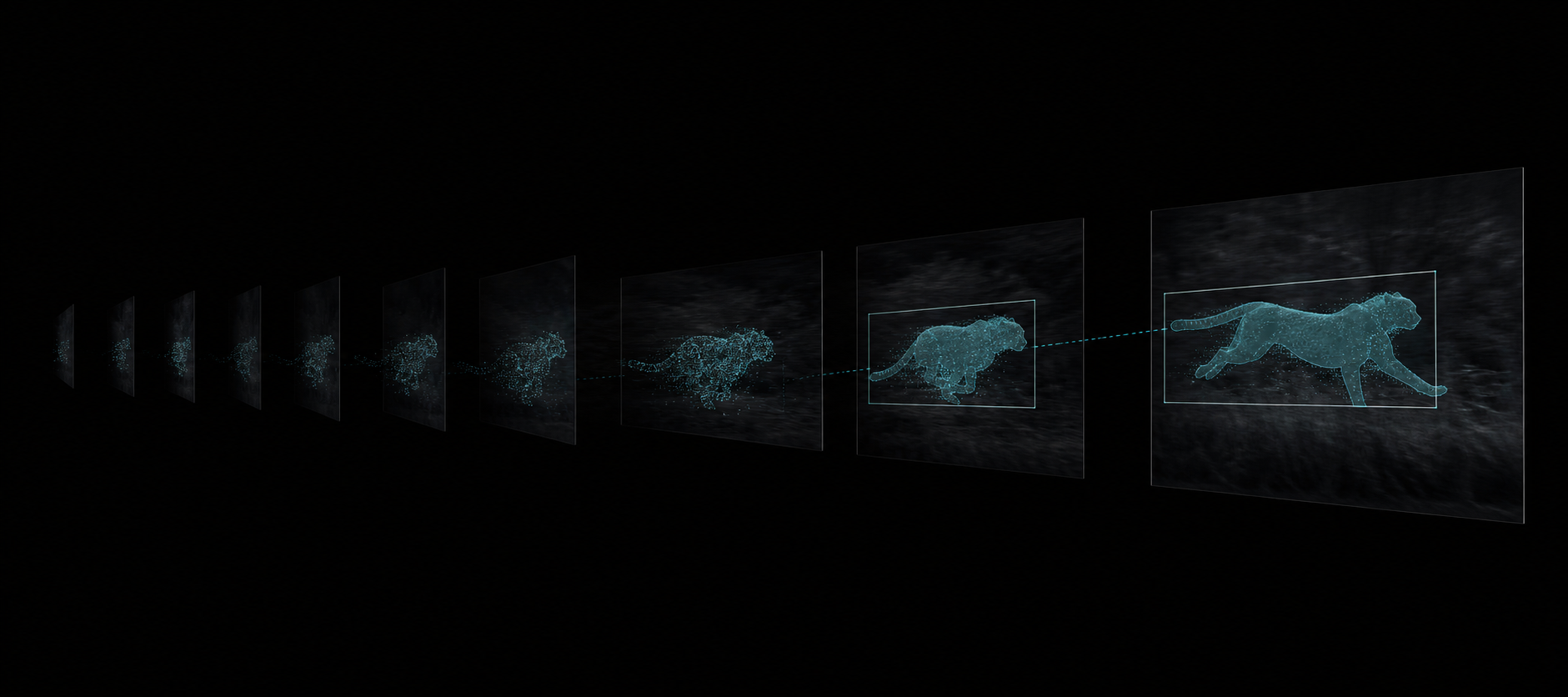
2024 — NOWLive-stream detection with YOLO and YOLO-E, SAM 2.1 segmentation, persistent track IDs, and robust occlusion handling.
YOLO and YOLO-E detection feed SAM 2.1 segmentation, refining masks and boxes before persistent track IDs are carried across the stream.
Built frame capture, object association, overlay rendering, multi-object tracking, and occlusion-handling components in Python and OpenCV.
Evaluated SAMURAI-based workflows to reduce bounding-box drift and preserve continuity in crowded, motion-heavy, partially obstructed scenes.
A FastAPI system turning PostgreSQL supply data into forecasts, anomaly signals, explainable risk scores, and natural-language analysis.
PostgreSQL supply data moves through Pandas feature pipelines into forecasting, anomaly detection, and risk-scoring workflows.
Delivered the signals through a FastAPI dashboard that highlights parts at risk of shortage and helps teams prioritize review.
Connected Bedrock, LangChain, and MCP tools for natural-language analysis of shortage trends, inventory risk, and forecast explanations.
Analyzed large COBOL systems to extract business logic, map dependencies, document risks, and support AI-assisted modernization.
Worked across more than 100,000 lines of legacy COBOL as part of an AI-assisted modernization effort.
Extracted business logic and mapped dependencies to make a large, interconnected system easier to reason about.
Documented migration risks and system relationships to support safer modernization decisions with AWS Transform.
Computer vision, forecasting, agent tooling, and backend systems—built for real operational environments.
My work spans real-time object tracking, supply-readiness forecasting, natural-language analysis, and legacy modernization for Air Force and defense programs.
A representative view of how forecasting, anomaly detection, and risk scoring can surface parts that may affect fleet readiness before they become urgent.
Model intelligence
THE VISION STACKReal-time computer vision is not one model. It is a chain of decisions—detect the object, understand its shape, preserve its identity, and deliver the result fast enough to matter.
Fast object detection for live video: locating targets, producing bounding boxes, and establishing the first signal in a real-time vision pipeline.
Pixel-level mask refinement around detected objects, used to improve spatial precision beyond a bounding box and support more useful visual outputs.
Maintaining identity over time through motion, crowding, and partial obstruction—with a focus on reducing drift and preserving track continuity.
The core training, experimentation, and classical machine-learning toolkit behind model evaluation and applied predictive workflows.
Beyond the model
PRODUCTION SYSTEMSBedrock, LangChain, and MCP for connecting models to tools, structured data, and natural-language analytical workflows.
Pandas, NumPy, PostgreSQL, forecasting, anomaly detection, feature engineering, and explainable risk scoring.
FastAPI, Flask, Node.js, and REST interfaces that turn model logic into reliable, consumable software.
Docker, Kubernetes, S3, SageMaker, Git, and AWS services for packaging, deployment, storage, and iteration.
Playwright-powered research and data collection workflows, paired with summarization and structured metadata extraction.
AWS Transform-assisted legacy analysis: extracting COBOL business logic, mapping dependencies, and surfacing migration risk.
Understand the data, operational constraints, edge cases, and the decision the system actually needs to support.
Choose models and features for the real requirement, then evaluate continuity, failure modes, and explainability—not just a headline metric.
Wrap intelligence in APIs, interfaces, automation, and monitoring so people can use it reliably in a live workflow.